


 1300 164 990
Eye Twitching: Causes, Symptoms, and Treatments
Updated on on June 4th, 2026
Published on March 14th, 2023
 Australia

Eye twitching, also known as eyelid myokymia, is an eye condition that causes the eyelid to spasm and twitch sporadically. Eye twitching is a term used to describe muscle spasms that occur in the eyelid and can be categorised into three main types: eyelid myokymia, blepharospasm and hemifacial spasm. The common causes of an eye twitch include stress, fatigue, too much caffeine, eye strain, dry eyes, nutritional deficiencies, and light sensitivity. The symptoms associated with eye twitching may include eye irritation, vision problems and facial spasms. Eye twitching treatments include rest, drinking less caffeine, and a low-stress lifestyle in some cases, and for other types, surgery or eye injections may be prescribed.
It is important to note that Oscar Wylee offers optometry services only; this article is for educational purposes only and is not a substitute for professional medical advice, diagnosis, or treatment.
What is Eye Twitching?
Eye twitching can be defined as both an eye condition in itself and a symptom of other eye conditions. The occurrence of eye twitching may be categorised into different types, and eye twitching describes the general occurrence, which is the rippling contractions of the eyelid, most often the lower one. When eye twitching is mentioned, or people ask what eye twitching is, it is most often in relation to eyelid myokymia, as it is the most common and general form of eye twitch. Eyelid myokymia is a very common yet generally benign condition that may be caused by stress, fatigue and caffeine, according to Abd Alkader, Jafer Chardoub, and Bhupendra C. Patel's research article titled 'Eyelid Myokymia', published in 2023. Occasional eye twitching is different from chronic eye twitching, where the spasms are frequent and persistent. Chronic conditions that can cause eye twitching include Benign Fasciculation Syndrome, neurological disorders and systemic diseases.
What are the Different Types of Eye Twitching?
There are three main types of eye twitching: eyelid myokymia, blepharospasm and hemifacial spasm. These types of eye twitching and their definitions are listed below.
- Eyelid myokymia: Myokymia is the most common type of eye twitching and is a benign eye condition brought on mainly by stress and fatigue.
- Benign Essential Blepharospasm (BEB): This type of eye twitching is defined as uncontrollable eye movements, such as blinking and twitching.
- Hemifacial Spasm: This type of eye twitching is a nervous system disorder that causes the muscles on the side of the face to twitch, including the eye.
What are the Causes of Eye Twitching?
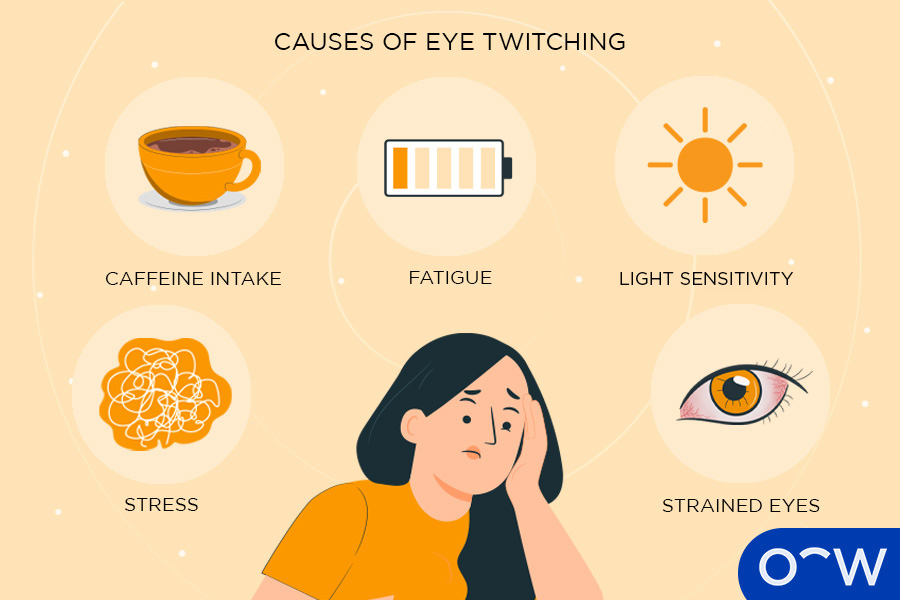
There are many different causes of eye twitching, which can often be solved through lifestyle changes. The main causes of eye twitching include stress, fatigue, too much caffeine, eye strain, dry eyes, nutritional deficiencies, and light sensitivity. Some causes of eye twitching and their definitions are listed below.
- Stress: Stress is the most common cause of eye twitching and often manifests as sporadic spasms.
- Fatigue: Fatigue may be the reason your eye is twitching.
- Too much caffeine: Too much caffeine is known to cause eye twitching as it overstimulates the nervous system, making your eyes twitch.
- Eye strain: When muscles are overworked, they can twitch, which can also occur in the eyes when you are straining your eyes.
- Dry eyes: Dry eyes can cause eye twitching due to irritation and poor surface lubrication, leading to excessive blinking, which can overstimulate the eyelid muscles.
- Nutritional deficiencies: Nutritional deficiencies can disrupt nerve and muscle function, potentially leading to eye twitching.
- Light sensitivity: Light sensitivity and eye twitching often occur together.
1. Stress
Stress is a common cause of eye twitching, especially eyelid myokymia. Stress may cause a sporadic spasm that is not harmful and will usually go away within a few days. Having a low-stress lifestyle, while not always easy, is a solution to this. Stress can be reduced through meditation, body movement and breathing exercises, which may reduce or prevent eye twitching. Stress can not only cause eye twitching, but it can also manifest as other health problems.
2. Fatigue
Fatigue caused by insufficient sleep can often trigger eye twitching as the body does not have enough time to rest and recover from the previous day. According to Good Vision for Life, an Optometry Australia initiative, insufficient sleep can cause eye twitches or spasms as well as other eye-related symptoms such as blurry vision, dry eyes and sensitivity to light due to eye fatigue. The eyes may twitch when a person is tired, as the neurotransmitters in the brain that control muscle movement are affected due to fatigue, leading to eye twitching. Prioritising 7-9 hours of sleep at night can be extremely beneficial not only for eye twitching but also for overall health.
3. Too much caffeine
Too much caffeine can increase your risk of eye twitching, as it is a stimulant that can cause involuntary muscle movement that can occur in many places on the body, including the eyelids. Caffeine also tires out the eyes due to the extra stimulation. Reducing your intake of caffeine can prevent and limit your eye twitching. Caffeine is not only present in coffee but also in tea and soft drinks.
4. Eye strain
Eye strain is a known cause of eye twitching. If your eyes are focusing for long periods of time on certain tasks, such as computer work, it can put a strain on your eyes, causing the muscles to spasm and twitch. Strained eyes may also be the result of uncorrected vision problems; therefore, prescription glasses are a possible treatment for eye twitching as they correct your vision and allow your eye muscles to relax.
5. Dry eyes
Dry eyes can trigger eye twitching as the eyelids lack lubrication, leading people to overcompensate by blinking excessively. This, in turn, can fatigue and spasm the surrounding muscles, leading to possible eye twitching.
6. Nutritional Deficiencies
Nutritional deficiencies, particularly in magnesium, vitamin B12, vitamin D, and potassium, can lead to eye twitching. This is because specific minerals and vitamins are crucial for correct nerve signalling and muscle contractions. When there is a vitamin imbalance, eye twitching may occur.
7. Light Sensitivity
Light sensitivity often accompanies eye twitching. Bright lights can act as sensory triggers, leading to eye strain, causing the eyelid muscles to spasm and the eyes to twitch. Extra effort used to strain the eyes in bright environments can also lead to eye twitching.
Why Does Left Eye Twitching Happen?
Left eye twitching is usually harmless and linked to stress, fatigue, caffeine, eye strain, and dry eye syndrome, like general eyelid twitching, according to Dr. Yoshinori Abe. In some Asian cultures, left eye twitching is thought to bring good fortune, but in parts of Africa and Europe, it can be seen as a warning of bad luck. There is no scientific link between eyelid twitching and future events, according to Dr. Yoshinori Abe.
Why Does Right Eye Twitching Happen?
Right eye twitching is usually harmless and linked to stress, fatigue, caffeine, eye strain, and dry eye syndrome, like general eyelid twitching. There is no medical difference between a left eye twitch and a right eye twitch, as it is a muscle spasm, according to All About Vision.
What Symptoms Can Occur Alongside Eye Twitching?
There are many symptoms people may experience as a result of eye twitching, including eye irritation, vision problems, facial spasms and an increased rate of blinking. The common eye twitching symptoms and their definitions are listed below.
- Eye irritation: Eye irritation is often the first symptom of eye twitching and is caused by the muscles in the eye twitching and spasming, making the eyes irritated and uncomfortable. Eye irritation may be relieved with eye drops to add moisture to the eyes.
- Vision problems: Vision problems are a symptom of eye twitching. The contracting and convulsing of the eyelid muscles caused by eye twitching can affect vision, leading to blurred vision and eye strain. If you are experiencing vision problems alongside eye twitching, you should see an optometrist for a comprehensive eye test so they can assess your vision and eye health.
- Facial spasms: Facial spasms are a common symptom of hemifacial spasms, which is a type of eye twitching. Hemifacial spasms cause the muscles on the sides of the face to contract or spasm involuntarily, and it is often caused by a blood vessel pressing or pulsating on a facial nerve. Not only does this condition cause eye twitching, but it also causes facial spasms around the mouth. If you have any type of facial spasms, it is important to seek medical attention.
- Increased rate of blinking: An increased rate of blinking is a common symptom of blepharospasm, which is a type of eye twitching. Blepharospasm causes involuntary blinking caused by muscle spasms in the eye. Abnormal blinking of the eye can happen multiple times throughout the day, and this condition can also force the eyelids to close in some cases. If this occurs, seek attention from an eye care professional so they can recommend treatment options.
When Should Eye Twitching Become a Medical Concern?
Eye twitching should become a medical concern if you experience it consistently for over a week, experience lid closure, involve other facial muscles, redness, swelling, or eye discharge, or droopy eyelids. If you experience these symptoms along with your eye twitch, it may be indicative of something more serious and should be further investigated, according to the Vision Eye Institute, Australia.
What Treatments Help Relieve Eye Twitching?
The treatments available for eye twitching vary depending on the type of eye twitching. For eyelid myokymia, lifestyle changes can treat it, whereas others require more involved treatment. Eye twitching treatments include rest, drinking less caffeine, injections and surgery. The treatments available for eye treatment are listed below.
- Rest: Rest is important to treat eye twitching, as fatigue is a common cause of this eye condition. Allowing the eye muscles to relax can be very beneficial for eye twitching. Prioritising 7-9 hours of sleep each night may resolve an eye twitch. It can also be helpful to take short breaks from screens and rest your eyes, as well as create a consistent sleep schedule.
- Drinking less caffeine: Drinking less caffeine is an effective way to reduce eyelid twitching. Caffeine is a stimulant that can contribute to eyelid muscle spasms, so reducing your intake of caffeine is recommended to relieve eyelid twitching. This includes coffee, tea, soft drinks, and energy drinks.
- Injections: Certain injections can disrupt nerve signals to muscles and cause paralysis, which can be used to treat eyelid twitching, according to the Better Health Channel, Victoria. Usually, multiple injections are given to a patient above and below the eye, and the complete effect usually takes about a week and lasts approximately 4 months, according to the Better Health Channel, Victoria.
- Surgery: Surgery for eyelid twitching, known as myectomy, is an operation where some or all of the eyelid and eyebrow muscles responsible for squinting are weakened or removed, according to the Better Health Channel, Victoria. Myectomy can improve eye twitching symptoms in up to 80% of patients, according to the Better Health Channel, Victoria.
How can Lifestyle Changes Reduce Eye Twitching?
Lifestyle changes, including stress management, adequate sleep, and caffeine reduction, can reduce eye twitching effectively, according to All About Vision. Stress is a common trigger of eye twitching. Taking steps such as calming activities like meditation, yoga, and deep breathing may reduce symptoms. Aiming for 7-9 hours of sleep is also highly recommended to reduce eye twitching. Creating a consistent sleep schedule is an actionable lifestyle change you can make to improve sleep quality. Reducing caffeine intake is also recommended; perhaps switch to decaf.
How can Screen Habits help Prevent Eyelid Twitching?
Eyelid twitching can be triggered by digital eye strain, meaning creating healthy screen habits can improve or prevent symptoms. According to Irfan B. Gunes's 2024 research article titled 'Association Between Eyelid Twitching and Digital Screen Time, Uncorrected Refractive Error, Intraocular Pressure, and Blood Electrolyte Imbalances', a significant association was found between increased daily digital screen time and the occurrence of eyelid twitching. To combat this, healthy screen habits include following the 20-20-20 rule, which involves taking a 20-second break every 20 minutes to look at an object at least 20 feet away (about 6 metres). Trying to consciously blink more while looking at screens can also help prevent eyelid twitching, as well as ensure your screen is not too close. It may also help to dim your brightness, keeping it at the same level as your environment.
How do Prism Lenses Help Eye Twitching?
Prism lenses may help indirectly with eye twitching by correcting misaligned eyes and reducing eye strain. While prism lenses are not a direct treatment for the twitch itself, they help reduce the severe muscle strain caused by misaligned eye muscles, which can often be an underlying trigger for eyelid spasms, by properly aligning light before it enters the eye.
Does Wearing Blue Light Glasses Reduce Eye Twitching?
Yes and no. It is important to distinguish between prescription glasses and non-prescription blue light filters. While wearing blue light glasses has not been proven to directly reduce eye twitching on its own, it may help with digital eye strain, which is a common aggravating factor for eye twitching. If you spend much of your time in front of a digital screen for work or school, you may benefit from blue light blocking glasses, as they may potentially protect your eyes from artificial blue light and reduce glare. At Oscar Wylee, we offer a blue light filter for an additional $85 on top of a standard pair of optical glasses. However, if your twitching is caused by an uncorrected prescription, standard prescription lenses will be needed to truly resolve the strain.
Is it Possible Eye Twitching is Caused by Contact Lenses?
Yes, it is possible that eye twitching is caused by contact lenses. Contact lenses can cause eye dryness and irritation, and possibly eye strain if your prescription is outdated. If you are experiencing eye twitching, try switching to glasses temporarily, using lubricating contact lens-safe eye drops, and always ensure proper hygiene when handling contact lenses.
How can Eye Twitching be Prevented?
Eyelid myokymia, a common type of eye twitching, may be prevented through a low-stress lifestyle. Also, by maintaining a healthy diet and engaging in regular exercise, you may be able to prevent eyelid myokymia. Other forms of eye twitching, such as blepharospasm, cannot be prevented, although the symptoms can be managed using injections.
What Conditions are Commonly Confused with Eye Twitching?
The conditions commonly confused with eye twitching include blepharitis, dry eye syndrome, allergies, and neurological disorders. See the table below for more information about these conditions.
| Condition | Symptoms | Causes | Severity | Treatment |
|---|---|---|---|---|
| Blepharitis |
|
|
|
|
| Dry eye syndrome |
|
|
|
|
| Allergies |
|
|
|
|
| Neurological disorders |
|
|
|
|
It is important to note that Oscar Wylee offers optometry services
only; this article is for educational purposes only and is not a
substitute for professional medical advice, diagnosis, or
treatment.
Read Eye Twitching: Causes, Symptoms, and Treatments in other Oscar Wylee regions and their languages.
Australia